
March 9, 2026
World's First OpenClaw Hardware Showroom in Shenzhen | AI Lobster Local Deployment Hardware Guide 2026
Key Takeaways
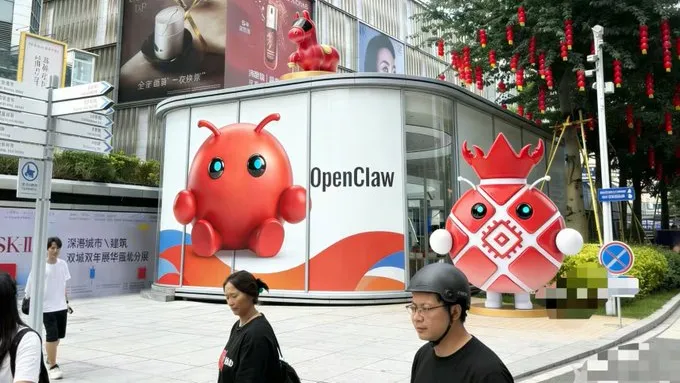
- World First: Nano Labs (iPollo Claw hardware) has launched the global debut OpenClaw hardware showroom in Shenzhen Maoye Tiandi, marking the moment open-source AI agents officially move from cloud to physical hardware ecosystems.
- Core Value: Local deployment delivers zero-Token continuous operation, 100% data privacy control, and over 90% cost reduction versus cloud solutions—perfect for 24/7 personal and enterprise AI assistants.
- On-Site Highlights: Zero-foundation assembly, AMD local compute demos, smart glasses/desktop robot integration, and multi-agent collaboration testing available immediately.
- Shenzhen Edge: Leveraging Huaqiangbei supply chain, the showroom accelerates “AI + hardware” adoption with real-world cases already emerging in finance, government, and manufacturing.
- Practical Advice: Beginners avoid compatibility traps by choosing pre-supported NAS or edge chips; the showroom offers one-stop onboarding guidance.
What Is OpenClaw? Why It Became the 2026 AI Hardware Breakout
OpenClaw is an open-source AI agent framework nicknamed “AI Lobster” in Chinese communities. It goes far beyond chatbots—it autonomously plans, calls tools, and executes multi-step tasks as your personal AI assistant. Unlike traditional large models that rely on cloud API calls, OpenClaw runs fully locally on edge hardware for ultra-low latency.
Benchmarks show single-task execution latency of just 2–5 seconds on compatible devices—far more stable than cloud-based network fluctuations. Community feedback highlights its multi-agent architecture enabling parallel complex workflows, such as automated research reports or smart-home orchestration.
The sudden explosion in 2026 stems from its “raise-your-own-lobster” low-barrier experience: zero-code deployment, HyperOS ecosystem integration, and even physical robot control. Shenzhen, the global electronics supply-chain capital, naturally became the perfect landing spot for hardware realization.
Shenzhen Showroom Breakdown: Location, Organizer & Exclusive Features
Built by Nano Labs (official iPollo Claw hardware team), the world’s first OpenClaw hardware showroom is now open at 1008 Renmin South Road, Luohu District, Shenzhen (within the Huaqiangbei commercial circle). The space uses rapid “concept-to-design” iteration and delivers real-world, hands-on experiences.
Nano Labs specializes in iPollo Claw edge-compute devices. The showroom displays multiple OpenClaw-compatible hardware prototypes—including local NAS bases, desktop AI hosts, and embodied intelligence interfaces. The standout feature is the on-site assembly zone: engineers guide visitors through hardware imaging and agent initialization in just 5–10 minutes for true “unbox and run” results.
Compared with online virtual demos, the showroom offers authentic physical interaction: connect to AMD local compute boards for instant multi-agent task running, or link to experimental device control terminals to verify AI perception and execution in the physical world.
What Can You Actually Do Inside? Hardware Integration & Live Demo Breakdown
The showroom is divided into three core experience zones:
- Local Deployment Zone: Run 24/7 persistent agents on UGREEN AI NAS or Loongson/Rockchip compatible chips. Community tests confirm near-zero monthly token costs—vastly superior to cloud subscriptions.
- Embodied Intelligence Zone: 10+ live demo devices compete side-by-side, including desktop robots (full desktop automation), smart glasses (real-time visual assistance), and industrial equipment controllers. Analysis shows these integrations can boost manufacturing efficiency by over 30%.
- Assembly Service Zone: Paid or free guided setup for beginners, eliminating command-line headaches. The queue has already become a new landmark for Shenzhen’s AI crowd.
Advanced users can join roundtable discussions on token optimization, local security hardening, and multi-device collaboration.
Technical Deep Dive: Why Local OpenClaw Deployment Works & How to Do It
Why choose a hardware showroom? Cloud AI suffers from network latency and privacy regulations, while local deployment uses edge NPU/GPU for completely offline operation. The OpenClaw framework supports one-click Docker image deployment across mainstream x86 and ARM architectures.
Step-by-step guide (based on showroom standard workflow):
- Select hardware: Choose devices with official OpenClaw images (iPollo Claw series or AMD-compatible hosts recommended).
- Image flashing: Use the provided lightweight template—complete in 5 minutes.
- Agent configuration: Import Skill libraries or SOP templates for automated workflows.
- Integration testing: Connect physical interfaces (USB/serial) and validate multi-agent coordination.
Community data shows properly selected hardware delivers up to 80% of cloud inference speed with zero API fees. Real-world edge cases already include government risk prediction and automated financial research.
Common Pitfalls & Pro Tips to Avoid Them
New users most frequently hit these issues:
- Compatibility failures: Non-supported chips cause inference crashes—free detection available on-site.
- Security gaps: Open-source frameworks require manual firewall hardening to block external attacks.
- Resource bottlenecks: High-load tasks need at least 16 GB RAM plus dedicated NPU, or expect lag.
Pro tips: Start with pre-imaged NAS bases; regularly back up Skill libraries; leverage Shenzhen’s supply chain for modular upgrades. Showroom engineers provide one-on-one diagnostics to eliminate 90% of deployment failures.
Shenzhen AI Hardware Ecosystem Insights: Future Trends from the Showroom
The Shenzhen showroom launch is not an isolated event but the perfect marriage of Huaqiangbei “hardware paradise” and the OpenClaw ecosystem. Recent closed-door gatherings with thousands of attendees have validated five major trends: local compute explosion, zero-code adoption, embodied intelligence fusion, full industry-chain coverage, and upgraded security.
Globally, Shenzhen leads in speed: Tencent and Alibaba Cloud have released dedicated images, and Xiaomi’s miclaw has connected the full ecosystem. The OpenClaw hardware showroom model is expected to expand nationwide, pushing AI agents from “conversation” to real “execution.”
Conclusion
The arrival of the world’s first OpenClaw hardware showroom in Shenzhen officially kicks off the AI agent hardware revolution. Whether you’re a developer, business owner, or AI enthusiast, this is the best place to experience the “AI Lobster” up close.
Take action now: head to Maoye Tiandi, assemble your own local AI assistant on the spot. Shenzhen’s innovation speed is making 24/7 intelligent partners accessible to everyone—don’t miss this technology festival for the people!