
February 15, 2026
Peter Steinberger Joins OpenAI: Revolutionizing Personal AI Agents with OpenClaw Insights
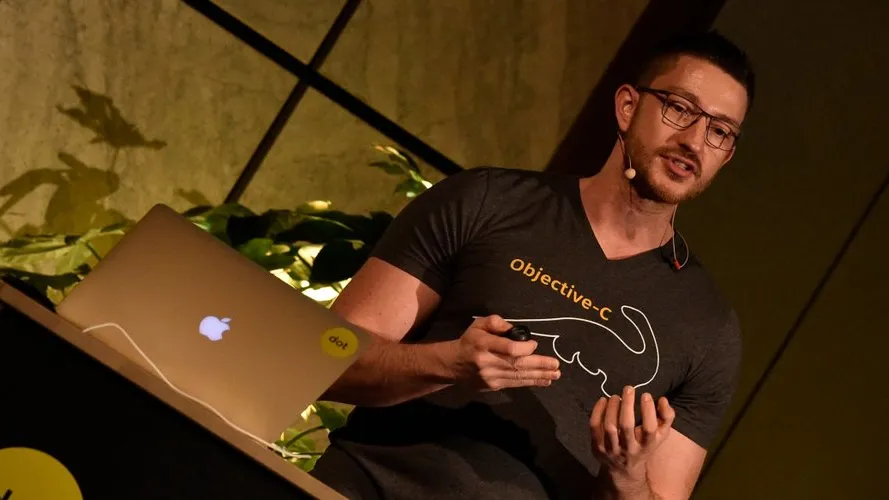
Key Takeaways
- Peter Steinberger, creator of the viral open-source AI agent OpenClaw, has officially joined OpenAI to lead development of next-generation personal AI agents.
- OpenAI CEO Sam Altman highlighted Steinberger’s visionary ideas on multi-agent systems, describing the future as “extremely multi-agent.”
- OpenClaw will move to an independent foundation model, remaining fully open-source with ongoing support from OpenAI.
- This transition signals a major industry shift toward collaborative, action-oriented AI capable of autonomous task execution.
- Community benchmarks and real-world usage reveal strong potential for productivity gains, balanced against challenges in scalability, security, and coordination.
Peter Steinberger’s Background and Expertise
Peter Steinberger is an Austrian software engineer with a strong foundation in mobile and developer tools. He graduated from Vienna University of Technology, where he later taught iOS and Mac development courses.
He gained professional experience as a senior iOS engineer in San Francisco before co-founding PSPDFKit in 2011—a PDF SDK company that grew rapidly through bootstrapping and secured a major €100 million investment in 2021. This success gave him the freedom to explore emerging fields, eventually leading him to AI agent development.
His ability to build scalable, user-focused systems made him well-suited to tackle the complexities of modern agentic AI.
The Phenomenal Rise of OpenClaw
OpenClaw—originally launched as Clawdbot and briefly renamed Moltbot due to trademark concerns—quickly became one of the most talked-about open-source AI projects of 2026.
Unlike traditional chat-based assistants, OpenClaw focuses on real action:
- Executes shell commands, automates browser workflows, manages emails, and handles calendar events.
- Operates locally with strong privacy guarantees and integrates naturally with messaging platforms like WhatsApp and Slack.
- Supports multiple LLMs and allows extensive custom tool development.
Its open-source philosophy and emphasis on actual task completion drove explosive growth, reaching over 100,000 GitHub stars in a short time.
Performance is excellent for well-defined automations, but community testing has surfaced common edge cases:
- Difficulty interpreting vague or multi-step instructions.
- Potential security exposure when granting broad tool permissions.
- Coordination challenges when scaling to multi-agent scenarios.
These real-world insights have shaped ongoing improvements and informed Steinberger’s broader vision.
The Announcement and Strategic Alignment
On February 15, 2026, Sam Altman announced via X that Peter Steinberger had joined OpenAI. Altman praised Steinberger’s genius and forward-thinking perspective on agent-to-agent collaboration, stating that multi-agent capabilities would become core to OpenAI’s future products.
In his own announcement, Steinberger explained that OpenAI offered the ideal environment to scale his ideas globally without the distractions of startup operations. He confirmed that OpenClaw would transition to an independent foundation, preserving its open-source nature while receiving continued backing from OpenAI.
This structure helps maintain community trust and differentiates the arrangement from a conventional acquisition.
Why Multi-Agent Systems Are the Next Frontier
Single-model assistants excel at conversation but often fall short when tasks require planning, verification, and execution across multiple steps. Multi-agent architectures solve this by enabling specialization and teamwork:
- One agent researches, another analyzes, a third executes.
- Agents can debate, verify each other’s outputs, and correct mistakes.
Steinberger’s experiments with agent teams (e.g., simulating small development squads) demonstrated dramatic efficiency gains in complex workflows.
Expected benefits include:
- Dramatically higher task completion rates for real-world goals.
- Greater reliability through cross-agent checking.
- Applicability from personal productivity tools to enterprise automation.
Remaining challenges include:
- Managing communication overhead between agents.
- Preventing goal misalignment or cascading errors.
- Ensuring robust security and ethical guardrails in collaborative setups.
Community and Industry Response
The developer community has responded with a mix of excitement and cautious optimism. Many developers celebrate the continued open-source commitment and see potential for standardized agent frameworks.
Others express concern about long-term independence, though the foundation model has eased many of those worries. Industry commentary widely views the move as a significant talent acquisition for OpenAI in the increasingly competitive agent space.
Conclusion
Peter Steinberger’s move to OpenAI marks an important milestone in the evolution of personal and collaborative AI. By combining grassroots open-source innovation with large-scale research resources, this partnership has the potential to accelerate the arrival of truly useful, proactive AI agents.
Follow the latest developments by experimenting with OpenClaw yourself or staying tuned to announcements from OpenAI and key figures in the agentic AI space.