
February 26, 2026
Perplexity Computer: The 19-Model AI Digital Worker That Executes Full Projects End-to-End
Key Takeaways
- Launched February 25, 2026, Perplexity Computer shifts AI from chat responses and single tasks to full autonomous workflows that run for hours or months.
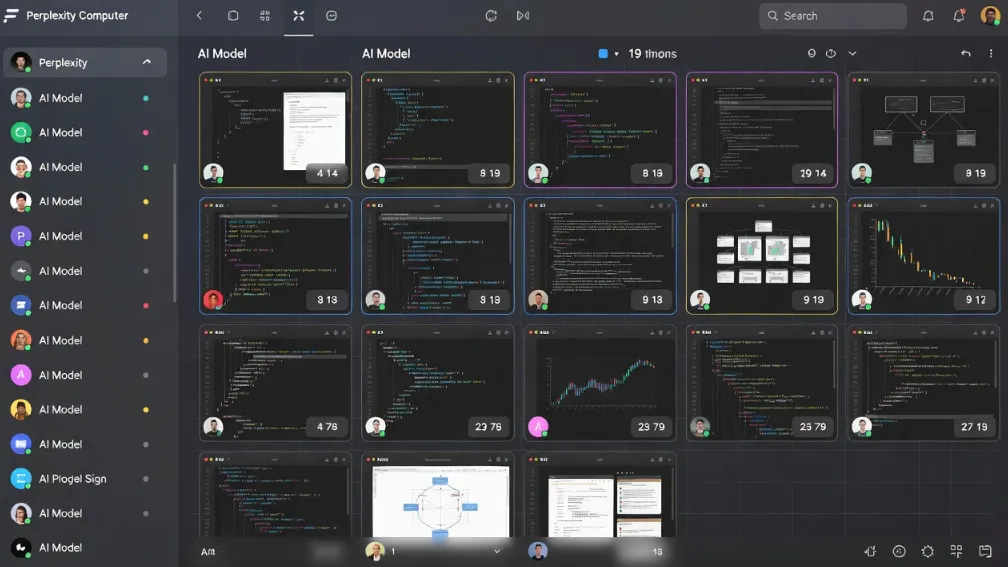
- Orchestrates 19 specialized frontier models in parallel, routing each subtask to the optimal AI for superior results across research, reasoning, coding, media, and more.
- Operates in secure cloud sandboxes with real browser, persistent filesystem, and hundreds of app integrations (Gmail, Slack, Notion, Calendar, etc.).
- Available exclusively to Perplexity Max subscribers ($200/month) with 10,000 monthly credits plus launch bonuses.
- Positions as a managed, safer alternative to open-source agents like OpenClaw while delivering production-ready artifacts.
- Early benchmarks and demos confirm strong performance on complex, multi-step projects that single-model systems struggle with.
What Is Perplexity Computer?
Perplexity Computer is Perplexity AI’s flagship evolution of artificial intelligence: a general-purpose digital worker that operates the same interfaces humans use. Analysis of the official launch shows it unifies every major AI capability into one cohesive system capable of handling entire projects from initial research through final deployment and ongoing management.
Unlike chat interfaces that simply answer questions or basic agents that complete isolated steps, Computer creates, delegates, executes, monitors, and iterates on complete workflows. It runs asynchronously in the background, allowing users to set goals and return to finished results.
The system builds on Perplexity’s strengths in accurate search and reasoning but extends them dramatically. Models continue to specialize—some excel at deep research, others at long-context recall or creative generation. Perplexity Computer’s orchestration layer exploits this specialization instead of forcing one model to do everything.
How Perplexity Computer Works: Deep Technical Breakdown
The process begins with a natural-language goal. For example: “Analyze ISM Manufacturing Index vs S&P 500 returns since 2000, create an interactive dashboard, and export a full report with recommendations.”
Here’s the step-by-step orchestration:
- High-level planning — Core model (Opus 4.6) decomposes the goal into tasks and subtasks.
- Sub-agent deployment — Specialized sub-agents spin up, each powered by the best-suited model from the 19-model pool (Gemini for exhaustive research, Grok for speed, ChatGPT 5.2 for massive context, Nano Banana for images, Veo 3.1 for video, and others).
- Parallel execution in isolated environments — Every sub-agent receives its own secure sandbox containing a real browser, filesystem, CLI tools, and authenticated API connectors.
- Autonomous problem-solving — If roadblocks appear (missing API keys, data gaps, code errors), new sub-agents automatically research solutions or implement fixes.
- Synthesis and delivery — Results converge into polished artifacts; the system maintains persistent memory for follow-up iterations or recurring tasks.
This architecture enables true end-to-end autonomy. Sub-agents run in parallel, communicate via shared memory, and continue working even while the user sleeps or handles other priorities.
Core Features and Capabilities
- 19-Model Orchestration: Dynamically assigns work across frontier models for best-in-class performance on every subtask.
- Real Tool Access: Full browser automation, file system operations, and direct API calls to connected services.
- Persistent Memory & Context: Remembers project history across sessions and long-running executions.
- Background & Recurring Workflows: Schedule tasks that monitor data sources, generate reports, or maintain dashboards indefinitely.
- Hundreds of Integrations: Native support for Gmail, Slack, Notion, Google Calendar, GitHub, and 400+ others via secure connectors.
- Media & Code Generation: Built-in high-quality image, video, and production-ready code output.
- Dashboard Monitoring: Real-time visibility into active sub-agents, progress, and resource usage.
Pricing and Availability
Perplexity Computer is available now exclusively to Perplexity Max subscribers at $200 per month. The plan includes 10,000 monthly credits plus a one-time launch bonus of 20,000 extra credits (valid for 30 days). Enterprise Max access is rolling out shortly.
Access via the web at perplexity.ai/computer or the desktop app. Mobile support arrives soon. Free and lower-tier users cannot access the full Computer experience.
Real-World Examples and Use Cases
Official demos and early user reports showcase production-level output:
- Economic Dashboard: Built a fully interactive web app displaying Big Mac Index data across countries with historical currency valuation charts and export options.
- Financial Analysis Report: Compared ISM Manufacturing Index against S&P 500 year-over-year returns since 2000, generated Excel files, visualizations, and a 15-page executive summary with insights.
- Custom Software Tools: Created an interactive ASCII editor featuring Figma-style drawing tools, undo/redo, and clipboard integration—all from a single prompt.
- Business Automation: Set recurring workflows that research market trends, draft Notion proposals, schedule follow-ups in Calendar, and post updates to Slack.
Edge cases handled effectively include month-long monitoring projects, parallel execution of dozens of independent workflows, and complex multi-app orchestrations that would normally require a full team.
Perplexity Computer vs Competitors
OpenClaw: Computer delivers a fully managed, hosted experience with Perplexity’s search accuracy and safety controls. OpenClaw requires self-hosting and manual configuration, making Computer more accessible and enterprise-ready.
Claude Cowork / Artifacts: Broader access to 19 models from multiple providers (vs. Anthropic family only) plus stronger persistent memory and background execution give Computer an advantage for research-heavy or long-running projects.
Traditional Agents (Auto-GPT style): Far more reliable orchestration, isolated secure environments, and polished output delivery set Computer apart from earlier experimental systems.
Potential Drawbacks and Advanced Tips
Common Pitfalls:
- Vague goals produce broader but less precise plans—always specify output formats, constraints, and success criteria.
- Credit usage can accumulate quickly on month-long tasks; phase large projects and monitor the dashboard.
- New integrations require careful permission review for security.
Advanced Tips for Power Users:
- Chain projects by referencing previous outputs in new prompts to leverage persistent memory.
- Run multiple Computers in parallel for A/B testing concepts or handling separate workstreams.
- Use detailed subtask instructions when overriding default routing for specialized needs.
- Set recurring background tasks for ongoing monitoring (stock alerts, content calendars, competitive intelligence).
These practices, validated through launch analyses and early community feedback, maximize ROI on the Max subscription.
Conclusion
Perplexity Computer marks a pivotal moment in AI development—the point where systems stop assisting and start executing like digital colleagues. By intelligently orchestrating 19 top models within secure, tool-rich environments, it delivers on the long-promised vision of autonomous productivity at scale.
Whether you’re a solo founder clearing massive to-do lists, a researcher synthesizing month-long studies, or a team automating repetitive workflows, Computer offers tangible leverage today.
Upgrade to Perplexity Max and start your first Computer workflow at perplexity.ai/computer. The era of AI that truly works for you has arrived.